
Strengthening Alternative 911 Emergency Response
Establishing an Alternative Response Program in your City
Virtual Event
1:30 pm – 2:30 pm EST
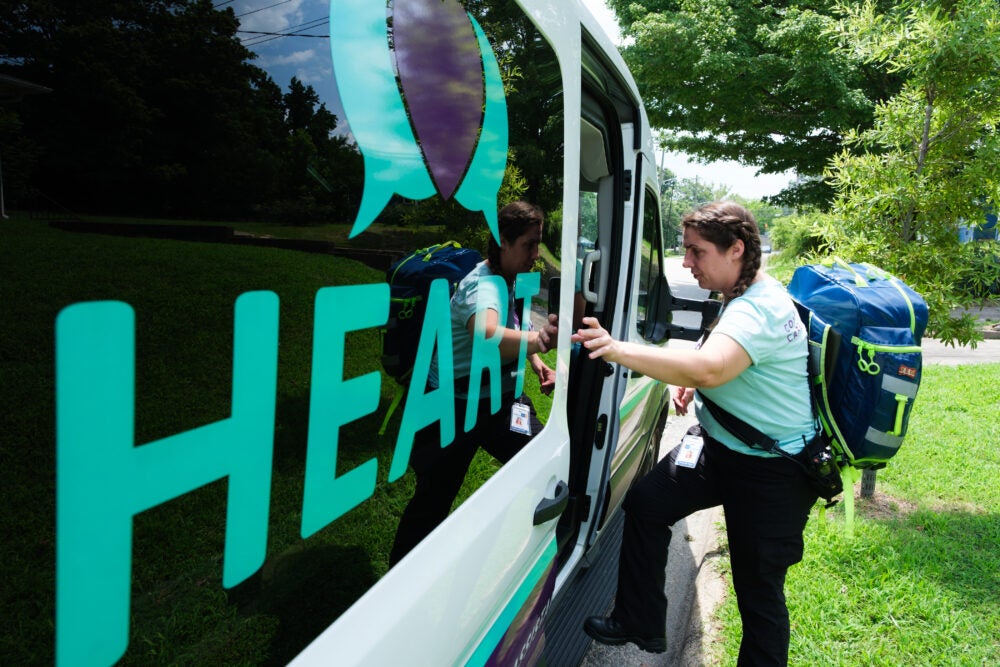
What does someone launching an alternative response program need to know to get started?
Across the country, many city leaders are ready to build alternative response programs that deploy specially trained, unarmed responders to relevant 911 calls, but are grappling with the same core questions:
- How do you choose the response team models that could be most impactful in your community?
- How do you decide whether to staff your program with city employees or work with a contracted provider?
- How do you fund your program for the long term?
During the first call in our four-part Alternative 911 Emergency Response Learning Series call on Thursday, February 19, from 1:30-2:30 p.m. ET, participants learned how Durham’s Community Safety Department (DCSD) tackled these choices with an open and expansive lens, and how that approach helped them build one of the largest alternative response programs in the country by call volume, responding to 28,000 calls for service since 2021.
This session showcased key takeaways from our publication “Establishing an Effective Alternative Response Program in Your City,” followed by a discussion with DCSD leadership and an audience Q&A. Watch the recording to learn more about practical strategies you can apply to designing, funding, and operating an effective alternative 911 emergency response in your city.
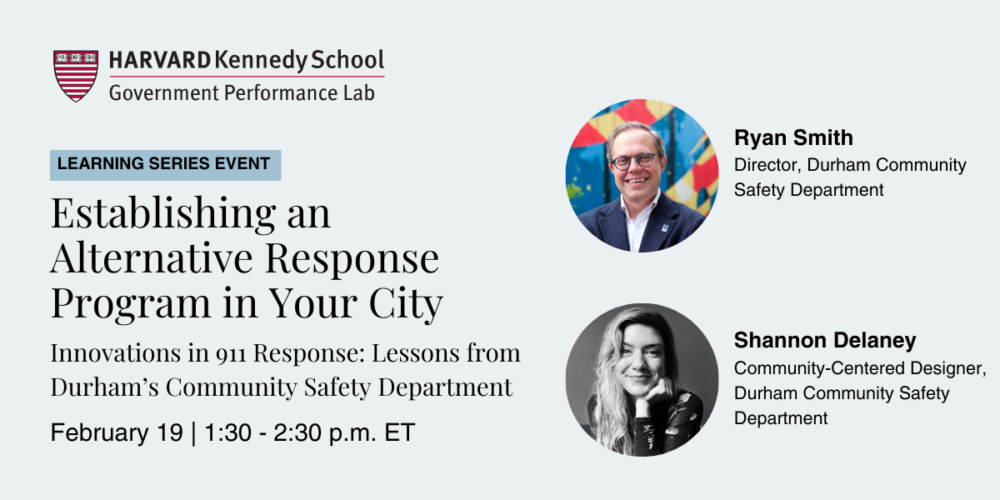
Panelists Bios:
- Ryan Smith, Director, Durham Community Safety Department
Before joining DCSD, Smith served as the Director of Durham’s Innovation Team (I-Team), where he developed solutions to problems faced by people impacted by the criminal legal system. City leaders said I-Team programs were notable for having strong data-driven performance practices.
- Shannon Delaney, Community-Centered Designer, Durham Community Safety Department
In her role as Community-Centered Designer, Delaney is responsible for leading program design, including conducting and facilitating community workshops to meet the core mandate of the department.