Since 2021, the Harvard Kennedy School Government Performance Lab (GPL) has worked closely with the City of Durham to support the launch and ongoing development of Durham’s Community Safety Department (DCSD). As Durham’s program has grown — becoming one of the nation’s largest alternative response programs — the city has hosted site visits from dozens of public safety leaders across the country who are eager to replicate DCSD’s success in their jurisdictions.
Recognizing the demand for clear, practical guidance, the GPL has consolidated some of Durham’s frequently asked questions and lessons learned into an in-depth case study series. Drawing from this real-world experience, the Innovations in 911 Response series provides strategies for public safety leaders seeking to design, launch, and improve alternative emergency response programs.
Each publication in the series explores a different aspect of developing effective, sustainable alternatives to traditional 911 response systems. Topics include how to develop data-driven decision frameworks, structure funding for long-term success, track program outcomes effectively, and hire and retain staff. Designed for local government leaders, practitioners, and researchers, this series equips readers with step-by-step strategies, reflective questions, and replicable templates that draw on lessons learned from Durham’s work.
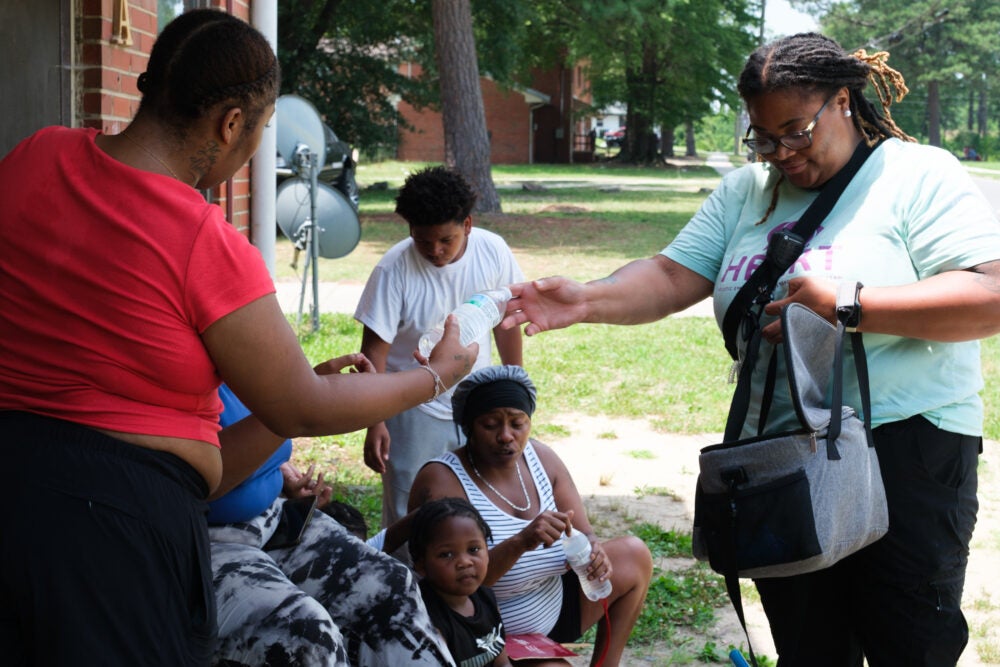
Sasha Morphis, a clinician with the Durham crisis response team called HEART, hands out water to a family that called needing cooling resources due to a power outage in the heatwave where temperatures are expected to reach close to 100 degrees. Photo by Cornell Watson.